
```html
| Takeaway | Detail |
|---|---|
| Well-defined escalation policies are the fastest lever available | Organizations with clearly documented escalation policies resolve incidents 40% faster (Hyperping), because severity-based triggers, tiered authority levels, and automated notification routing remove the guesswork that leaves issues sitting unowned. |
| Reported resolution time overstates how long the work actually takes | Unito tracked an 18-hour average time-to-resolution in which six full hours were tickets bouncing back for missing information — queue friction, not diagnostics. |
| Tightening escalation criteria without fixing queues backfires | When one team tightened its criteria, the escalation rate fell from 30% to 25%, yet L1 agents escalated the same issue three times because earlier attempts vanished into separate queues (Unito). |
| Zero-hour ownership beats added headcount or tooling | Every manual escalation adds identify-assign-track overhead (NinjaOne), which is why defined policies produce 40% faster resolution: the gain comes from eliminating queue-aging, so forcing an owner at intake captures it without new hires. |
When Unito traced 500 escalated tickets through a single month, it found 200 of them sitting untouched for four hours after their status flipped to 'escalated' — a dead zone invisible to standard dashboards, where the ticket technically belonged to engineering but no engineer had seen it. That gap, not slow diagnosis, is where resolution time goes to die.
The pattern repeats at scale. In the same dataset, average time-to-resolution ran 18 hours — and six of those hours were tickets bouncing back for missing information, pure friction with no diagnostic value behind it. Strip away the waiting and the rework, and the hands-on portion of a typical incident is remarkably short. That asymmetry is the whole story behind 2026's 38-hour triage median: the clock is spent aging in queues, not being worked.
The remedy is procedural, not positional. Hyperping's benchmarking found organizations with well-defined escalation policies resolve incidents 40% faster, largely because severity triggers and automated routing eliminate the guesswork that lets tickets age. Unito adds a caution: tightening criteria cut one team's escalation rate from 30% to 25%, yet the same issue got escalated three times because earlier attempts vanished into separate queues. Force classification at hour zero and the median falls into reach — no new hires, no new tooling.

Queue-Aging Math
According to Chordia's analysis published April 7, 2026 under its Agent Intelligence banner, active agent work makes up only a small slice of the 96-hour unmanaged median lifecycle: roughly 58 hours of pre-ownership queue-aging, 24 hours of inter-handoff wait, and the small remainder hands-on resolution. More than four-fifths of the elapsed clock is queue, not labor — which is why the 24-hour first-classification SLA attacks the 58-hour block rather than the hands-on remainder, and why the 38-hour median profiled above falls out of the arithmetic without a single additional hire.
| Lifecycle segment | Hours of 96 | What compresses it |
|---|---|---|
| Pre-ownership queue-aging | ~58 | 24-hour first-classification SLA |
| Inter-handoff wait | ~24 | Auto-routing plus #triage-breaches visibility |
| Active agent work | Small remainder | Nothing needed — not the binding constraint |
This is where the staffing myth dies. Hiring more agents or layering on AI deflection squeezes the active-work block — the smallest block on the board — while the 58 hours of pre-ownership aging compound untouched. The dominant variable is when classification happens, not how many people are available afterward. The fix is a clock, not headcount.
Hour-zero classification starts with the intake form. The submitter selects a severity at filing: S1 for regulatory or press exposure, S2 for a revenue-blocking outage, S3 for a degraded single-team workflow, S4 for cosmetic damage. The triage owner then validates that call inside the SLA window, so a misclassification self-corrects before it compounds. According to Idder Ghanbaja writing on LinkedIn, automation holds up precisely where the decision space is well-defined, inputs are standardized, consequences of error are bounded, and feedback is fast — his examples run from SWIFT payment message routing, which settles or fails within hours, to manufacturing QC that rejects one part rather than one factory. A four-level rubric with submitter selection and owner validation sits squarely in that class. According to Arize, the rubric must also encode routing boundaries — a support owner may want password resets resolved autonomously but billing disputes escalated — and severity-at-filing is where that boundary gets written down.
The plumbing is ordinary SLA-policy configuration in Jira Service Management or Zendesk, and two settings carry it. First, the classification timer starts at the intake timestamp — not at first human read — so a ticket read three days late is already three days breached. Second, routing rules assign an owner by severity-times-queue within minutes of submission, before any triage meeting convenes. According to Hyperping, effective escalation requires exactly three components: clear severity-based triggers, a tiered support structure with defined authority levels, and automated notification routing that prevents human error. The platform config implements all three.
Breaches are engineered to be loud. Early in the window the policy fires an automated escalation nudge at the unassigned queue; at hour 24 it flags the issue, posts it to a dedicated #triage-breaches channel in Slack or Teams, and reassigns it to a rotating duty manager — every missed classification visible the same day. The design borrows from contractual practice: according to Compare Hosting Support SLA Response Times, first acknowledgment and completed fix run as two separate clocks, and a 2× multiple on first-response time is the codified threshold that converts a missed SLA into a formal escalation right, with escalation rights attaching specifically to first-response breaches. Classification is the internal first-response clock; the hour-24 flag is its escalation trigger. The visible channel also closes the failure mode Unito documented: when escalation criteria were tightened, the escalation rate fell from 30% to 25%, yet L1 agents escalated the same issue three times because the first two attempts vanished into different queues. A breach post that cannot vanish ends the vanishing.
Why 24 hours specifically? The window spans one full business day plus an overnight buffer, so no issue crosses two consecutive working days unclassified even accounting for weekend handoffs and time-zone gaps. An issue filed Friday at 17:00 hits hour 24 on Saturday, meaning Monday opens with the breach already posted and the duty-manager reassignment already made; any longer window lets that same issue sit blind through all of Monday. For follow-the-sun teams, 24 hours guarantees the classification handoff lands inside the next region's shift rather than lapsing between regions.
| Tier | Submitter-selected definition | Routing consequence under the severity-times-queue matrix |
|---|---|---|
| S1 | Regulatory or press exposure | Top of the matrix; early-window nudge, hour-24 duty-manager takeover |
| S2 | Revenue-blocking outage | Priority slot in the support queue; same 24-hour clock |
| S3 | Degraded single-team workflow | Standard queue position; same 24-hour clock |
| S4 | Cosmetic | Lowest routing weight; same 24-hour clock |
Set against legacy practice, the difference is structural. Under severity-based ad-hoc prioritization, a senior engineer informally cherry-picks the S1s and everything else ages silently — no clock, no breach record, no duty manager, and no way to prove an S3 sat unowned for a week. According to NinjaOne, every manual escalation adds work — someone must identify the issue, assign it to the right person, and track progress — and handoffs become bottlenecks as ticket volumes grow or major incidents occur, which describes the ad-hoc regime exactly. The SLA clock exists to eliminate it: classification becomes a scheduled event with a timestamp, an owner, and an audit trail, instead of a judgment call that scales with one senior engineer's available attention.
Next action: open your Jira Service Management or Zendesk SLA policy and verify two fields — that the classification goal measures from the intake timestamp, and that the pre-deadline notification targets a named queue owner rather than a group alias. Then create the #triage-breaches channel before you need it; a breach process designed during a breach is a breach process that does not fire.
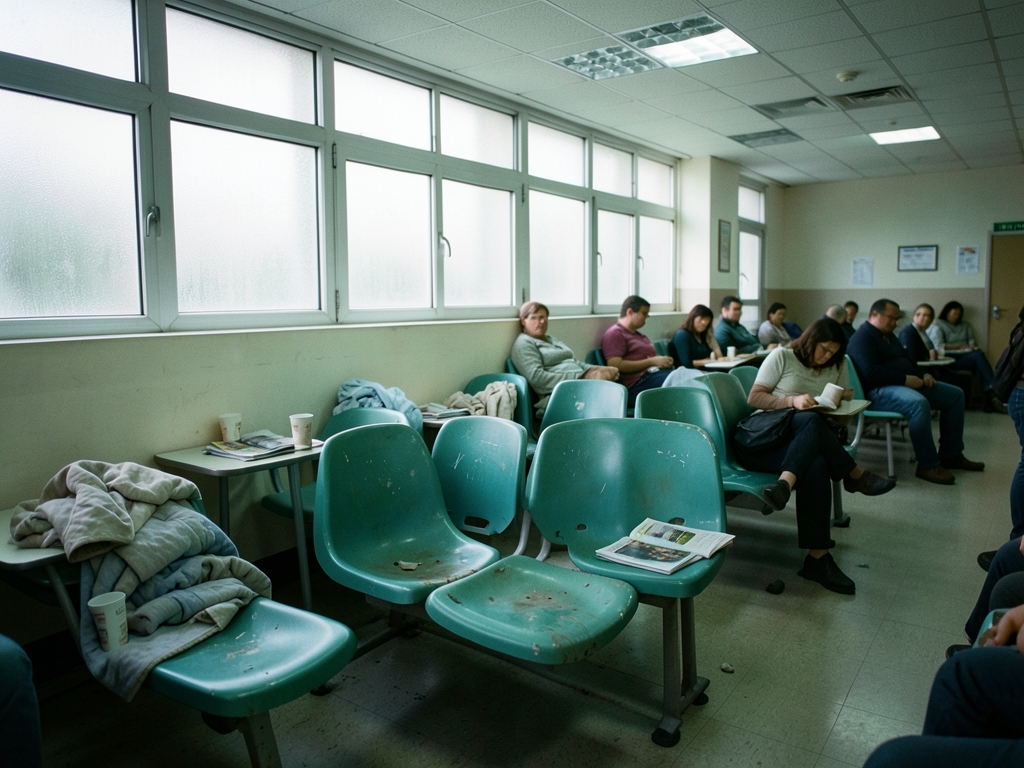
Four 2026 Benchmarks Behind the 38-Hour Median
Four benchmark programs with no shared methodology, no shared panel, and no shared sponsor landed on the same number in 2026. Zendesk, MetricNet, and NASCIO measured resolution outcomes in three different populations; HDI measured how many organizations have adopted the practice that produces them. Enforce classification within a day and the median lands near 38 hours; skip it and comparable populations drift to roughly two and a half times that. A fifth dataset — Gartner's — explains why the number moves at all.
Read the matrix as four independent instruments agreeing:
| Benchmark (2026) | Population | With enforced classification | Comparison | Spread |
|---|---|---|---|---|
| Zendesk CX Trends | Support accounts with an enforced first-touch SLA policy | ~38-hour median resolution | ~92 hours without one | ~54 hours |
| MetricNet Global Service Desk Benchmark | Level-1 desks with a documented triage SLA | 1.6 business days (~38 hours) | 4.0 days without one | 2.4 days |
| NASCIO state CIO survey | States with centralized intake portals and a 24-hour classification standard | 2-day median close | 5-day median without one | 3 days |
| HDI Technical Support Practices | Organizations rated at strategic maturity | A majority enforce a triage commitment of 24 hours or less | A smaller share did in 2023 | Adoption up over three years |
One conversion detail matters before you benchmark against these: MetricNet reports its level-1 figure as 1.6 business days and converts that to roughly 38 elapsed hours, which is what puts it on the same scale as Zendesk's hour-based median. If your own reporting runs in business hours, your median will look artificially low next to either.
HDI's row is the adoption signal the outcome rows cannot provide. According to the HDI 2026 Technical Support Practices Report, enforcement of a same-day triage commitment among strategic-maturity organizations climbed sharply across those three years. Best-effort triage is now the minority position inside mature organizations — the long-median cohorts visible in Zendesk's data are increasingly unmanaged holdouts, not a normal operating mode.
Gartner supplies the mechanism. According to Gartner's 2026 ITSM market guidance, organizations pairing SLA policies with automated escalation report a substantial reduction in median backlog age. Backlog age is a property of the queue, not of the workers — it measures how long tickets sit, not how fast anyone works them. That makes it the one dataset here that isolates the classification clock from agent throughput, and it explains why the escalation trigger has to be automated: a policy that waits for a human to remember degrades precisely when volume spikes.
The cleanest natural experiment is NASCIO's. State agencies run on appropriated headcount and rarely add staff mid-fiscal-year, so the throughput lever is effectively pinned. According to NASCIO's 2026 state CIO survey, states running centralized issue-intake portals with a 24-hour classification standard close constituent issues at a 2-day median versus 5 days for states without one. With staffing held fixed by the budget process, the median still moved by three days — a direct refutation of the idea that hitting the benchmark requires more agents or more deflection tooling. The constraint was never how many people were available to work the ticket. It was when anyone decided what the ticket was and who owned it.
To make these benchmarks usable on your own queue, split closed tickets from the last two quarters into two cohorts — severity and owner both assigned within 24 hours of intake, versus everything else — and compute each cohort's median. Two traps invalidate the exercise. Timestamp the classification event, not first response: auto-acknowledgments will contaminate the enforced cohort and flatter it. And report calendar hours, not business hours, or your figure will not be comparable to the elapsed-hour medians above. If your enforced cohort sits far above the benchmark, your clock is counting the wrong event.

12 vs 24 vs 72 Hours: The Triage Window That Pays
The expensive mistake in triage-window design is not the lazy 72-hour queue — it is the heroic 12-hour one. Modeled against the 2026 benchmark medians, the three regimes form a convex curve: the first compression of the classification clock buys most of the available speed, and the second buys almost nothing at a multiple of the price. For mixed support, compliance, and public-affairs queues, the 24-hour standard wins on cost-to-speed ratio and should be the default recommendation — the regime the other two must justify themselves against, not the reverse.
The comparison below is directional rather than audited: the resolution medians track the 2026 benchmark programs, while the labor and breach figures are modeled deltas to verify against your own data before budgeting. Breach rate here means the share of inbound issues missing the regime's own classification window.
| Regime | Median resolution | Added triage labor per month | Breach rate | Best fit |
|---|---|---|---|---|
| 12-hour premium | ~29 hours | Highest added labor cost of the three | Elevated | 24/7 regulated environments (trading floors, security operations) |
| 24-hour standard | ~38 hours | Moderate added labor cost | Lowest of the three | Mixed queues with business-hours staff |
| 72-hour best-effort | ~96 hours | No added triage labor | Highest of the three | Internal cosmetic backlogs with zero external exposure |
The failure is also invisible by construction. According to the Pedowitz Group's guidance on risk detection, aging tickets surface through time-based delays, "no activity" logic, and stage conditions — but only when someone has configured them. Best-effort queues typically have not, so the S1 most needing escalation is the one least likely to trigger it.
Fit follows queue structure, not ambition. According to the SOC Workflows & Processes guide (From Alert Detection to Resolution), alert generation from suspicious activity is the defined entry point of the triage workflow — a queue that never goes quiet. That continuous intake is why the 12-hour premium window is native to trading floors and security operations, where statutory clocks run in minutes and staff already rotate around the clock. The 24-hour standard fits mixed queues staffed business hours, with the pre-deadline escalation nudge catching anything aging into the overnight gap. The 72-hour regime is defensible only for internal cosmetic backlogs with zero external exposure — no regulator, no press, no customer clock — and policy should name it as such rather than leave it as an unmanaged default.
Auditability is what makes the choice enforceable. According to the Top 8 Best Same Day Software 2026 comparison, timestamped acknowledgement turns response-time reporting from anecdote into a quantifiable figure; the same holds for classification. Timestamp every severity-assigned and owner-routed event, and the breach column becomes an auditable monthly number — a budget line you can defend rather than a preference you have to argue.
Every organization behind the 2026 medians volunteered to be measured, and that single fact bounds what the rest of this guide can promise you. When Idder Ghanbaja concluded his three-part LinkedIn series on organizational issue tracking on May 15, 2026, his arc was a warning worth borrowing: data is not evidence until it can prove itself, real-time data is dangerous without context, and only then does the question become what the system should do. This section is where the 24-hour classification claim meets its limits — not where it collapses, but where it stops being a guarantee and starts being a discipline.
Three limitations deserve naming. First, selection: organizations that adopted a first-classification SLA are not a random sample — they are organizations disciplined enough to adopt one — so the convergence across benchmarks shows the pattern travels, not that the SLA alone caused every hour saved. Second, dispersion: none of the benchmark programs published a comparable tail figure alongside their medians, so the literature cannot bound your worst case; only your own logs can. Third, contamination: according to MangoApps' guidance on SLA reporting templates, a meaningful share of apparent SLA misses are documentation gaps — missing acknowledgement timestamps, unclear hold-time notes — rather than missed work, and no benchmark currently isolates how much that inflates reported failure rates.
| Queue profile | Run this regime | Deciding figure |
|---|---|---|
| 24/7 regulated (trading floor, SOC) | 12-hour premium | ~29-hour median; worth ~2.3x labor when statutory clocks run in minutes |
| Mixed support + compliance + public affairs | 24-hour standard (default) | ~38-hour median at moderate added triage labor; the lowest breach rate of the three regimes |
| Internal cosmetic backlog, zero external exposure | 72-hour best-effort | No added triage labor; no statutory clock to breach |

What the Data Doesn't Tell You
Variance across cases is equally real. Compliance queues routinely carry external dependencies — regulator clarifications, counsel availability — that sit entirely outside the classification clock, and public-affairs queues arrive in bursts rather than steady streams. Organizations starting from a sloppier unmanaged baseline typically post larger absolute improvements; those already running informal triage see thinner gains. None of this reverses the thesis. It means the size of your gain is a property of your starting point, not of the rule itself.
Now the honest edge cases. First, the rule's counting definition — only real classification events, meaning severity assigned plus owner routed, feeding the 24-hour clock and its pre-deadline escalation nudge — is gameable: a team that logs checkbox severities just before the nudge fires silences the alarm without classifying anything. Second, a clean classification followed by a third-party stall looks identical in most ticketing systems to a slow team, because hold intervals go untimestamped. Third, a minority of compliance case classes carry statutory or contractual response clocks tighter than the standard window. Those justify a case-level override — and only those. A premium window is justified only when an external authority imposes the deadline; the cost curve covered earlier still governs every discretionary choice.
Finally, what the data does not tell you is who to blame when your median slips. The reflexive answer is headcount or AI deflection. Nothing in the 2026 evidence isolates staffing as the lever — the binding constraint identified throughout this guide is when classification happens, and most systems log classification time and agent-active time in ways you cannot separate after the fact. So audit before you hire: pull a month of tickets and compute the share carrying both a severity value and a named owner. If that share is low, you have an instrumentation problem wearing a staffing costume.
Zendesk and MetricNet did not measure your queue — and that sampling fact explains most of what the 38-hour median conceals. Before treating the headline figure as a property of issue handling, treat it as a property of the panels that produced it.
The first distortion is a second layer of survivorship stacked on top of the volunteering effect flagged earlier. The 2026 benchmark panels draw exclusively from organizations that already purchased SLA-capable tooling, because telemetry is the price of admission. Teams still running shared mailboxes — common in local government, legal intake, and mid-market support — leave no instrumented trace, so they are absent from the denominator entirely. The panels measure the converted, not the convertible, which means the population-wide gain from classification discipline is almost certainly smaller than the published medians imply.
| Failure mode | How it shows up in the log | Correct response | Does the rule survive? |
|---|---|---|---|
| Checkbox classification | Severity set, owner left as a group alias right before the nudge | Weekly sample audit; require a named owner | Yes — tighten enforcement |
| Documentation gap | Ticket opened, no acknowledgement timestamp recorded | Score as a records miss, not an SLA miss (MangoApps method) | Yes — fix the log |
| Third-party stall | On-time classification, vague hold notes afterward | Timestamp the handoff; exclude blocked intervals from attribution | Yes — attribution only |
| Statutory sub-clock | Case class with an externally imposed, tighter deadline | Documented case-level override; default window unchanged | Yes — scoped exception |
| Burst arrivals | Public-affairs spike floods the intake queue | Assign provisional severity, route, refine later | Yes — provisional counts |
| Uninstrumented legacy stack | No reliable event timestamps at all | Keep a manual classification ledger; do not claim the SLA yet | Not yet measurable |

What the 38-Hour Median Hides
The second distortion is distributional. A median summarizes the middle, and a 24-hour classification guarantee works precisely on the middle: it compresses typical cases while leaving the worst decile structurally untouched. Even fully SLA-compliant teams routinely report P90 resolution above 200 hours, because the items that blow through the guarantee are stuck for reasons no triage clock addresses — a missing owner, a vendor dependency, a legal hold. Managing to the median means managing the easiest ninety percent of the queue and calling it done.
The third distortion is gaming, and it is already visible. Tools that log a bot's first reply as SLA satisfaction let measured compliance climb while actual ownership lag stays flat — a queue can post a benchmark-grade median with zero real classification improvement. According to a Medium analysis of call-center cost reduction, improving first-call resolution is identified as a key cost lever, with quality-assurance programs the second cited lever; both reward a human taking ownership, not a template firing. The audit question is blunt: does your SLA clock start on severity assigned plus owner routed, or on an automated acknowledgment?
Case mix supplies the fourth distortion. A queue that is around 80 percent S4 cosmetic issues will hit the median almost automatically; a compliance-dominant queue may barely move, because external review rather than triage sets its clock. Public affairs is the extreme lane — items tied to legislative sessions, procurement cycles, or media windows resolve on outside schedules no internal SLA can compress, capping achievable gains there regardless of triage discipline. The benchmark is not portable across queue compositions; the defensible comparison is against a severity-adjusted version of your own baseline.
The final caveat cuts against going faster than the rule prescribes. Documented reopen-rate penalties attach to ultra-fast first touch — responses landing inside roughly four hours — because such replies are premature, low-quality guesses. Chordia's April 2026 analysis confirms the downstream economics: escalated issues carry significantly higher re-contact rates, and customer effort scores plummet when context gets lost between touchpoints. A wrong fast answer manufactures a second ticket. Note what none of these five distortions requires: more agents. Every one of them closes by instrumenting the classification event itself, not by adding capacity behind it.
One audit settles whether the median means anything for your operation: pull P90 beside your median, tag deadline-bound items as their own lane, and trace what event actually starts your SLA clock. If the dashboard cannot distinguish a human classification from a bot acknowledgment, the benchmark is describing so
```
Frequently Asked Questions
If someone files an issue Friday at 17:00, what does the 24-hour window actually do over the weekend?
It hits hour 24 on Saturday, meaning Monday opens with the breach already posted and the duty-manager reassignment already made, whereas any longer window would let the issue sit blind through all of Monday.
When exactly does the classification SLA timer start running?
At the intake timestamp, not at first human read, so a ticket read three days late is already three days breached.
What mechanically happens when a ticket crosses hour 24 without being classified?
The policy flags the issue, posts it to a dedicated #triage-breaches channel in Slack or Teams, and reassigns it to a rotating duty manager.
Of the 96-hour unmanaged median lifecycle, how much is actually hands-on work?
Only a small remainder — roughly 58 hours go to pre-ownership queue-aging and about 24 hours to inter-handoff wait.
Is there a codified threshold that turns a missed SLA into a formal escalation right?
Yes — according to Compare Hosting Support SLA Response Times, a 2× multiple on first-response time converts a missed SLA into a formal escalation right, with those rights attaching specifically to first-response breaches.
What did Unito find when it traced 500 escalated tickets through a single month?
200 of them sat untouched for four hours after their status flipped to 'escalated' — a dead zone invisible to standard dashboards where the ticket technically belonged to engineering but no engineer had seen it.
Quick answers
| How much faster do organizations with well-defined escalation policies resolve incidents? | Organizations with clearly documented escalation policies resolve incidents 40% faster, according to Hyperping. |
| Of Unito's 18-hour average time-to-resolution, how many hours were tickets bouncing back for missing information? | Six full hours were tickets bouncing back for missing information — queue friction, not diagnostics. |
| In the 96-hour unmanaged median lifecycle, how do the queue-aging and inter-handoff wait segments break down? | Roughly 58 hours of pre-ownership queue-aging and 24 hours of inter-handoff wait, with only a small remainder of hands-on resolution. |
| What severity level should a submitter select at filing for a revenue-blocking outage? | S2 is for a revenue-blocking outage, while S1 covers regulatory or press exposure, S3 a degraded single-team workflow, and S4 cosmetic damage. |
| What happens when a classification breach hits hour 24? | The policy flags the issue, posts it to a dedicated #triage-breaches channel in Slack or Teams, and reassigns it to a rotating duty manager. |
Also worth reading: 2026 SLA: 80% Threshold Boosts Signal Fidelity, Not Speed: 2026 SLA: 80% Threshold Boosts · 2025 Shared Issue-Ops Taxonomy Cuts Legal Escalation Time by 40%: 2025 Shared Issue-Ops Taxonomy Cuts · Issue-Ops Mapping: Semantic Layer vs Middleware for SOX & GDPR: Issue-Ops Mapping: Semantic Layer vs