
| Takeaway | Detail |
|---|---|
| Link-based attacks dominate the threat landscape | 78% of email threats in Q1 2026 were link-based, shifting focus from local payloads to hosted credential phishing infrastructure. |
| Rapid campaign velocity outpaces manual triage | Microsoft observed 10 to 15 distinct device-code phishing campaigns launching every 24 hours since March 15, 2026. |
| Payload delivery methods are evolving quickly | QR code phishing emerged as the fastest-growing vector, more than doubling over the period, while malicious payload share settled at 13% in February and March. |
| Disruption yields immediate volume reductions | Following the Tyccon2FA takedown, associated email volume declined 15% over the remainder of March 2026. |
At 9:12 a.m., thirty-seven employees report the same DocuSign phish within eleven minutes. This surge highlights a critical failure in organizational escalation paths rather than SOC speed. Without a designed mechanism linking support intake, triage, and compliance sign-off, these reports default to a next-day queue. The result is a dangerous delay that allows attackers to exploit user sessions before defenses activate.
The scale of this threat is immense. Microsoft Threat Intelligence detected approximately 8.3 billion email-based phishing threats in Q1 2026 alone. While monthly volumes slightly declined from 2.9 billion in January to 2.6 billion in March, the nature of the attacks has shifted. Seventy-eight percent of these threats were link-based, indicating a preference for hosted credential phishing over locally-rendered payloads. This shift demands faster response times to prevent session replay.
Attackers are also leveraging new techniques with alarming speed. Since March 15, 2026, ten to fifteen distinct device-code phishing campaigns launched every twenty-four hours. These campaigns often bypass multi-factor authentication using tools like EvilTokens. If no one triages the initial spike until 8 a.m. the next day, clickers give attackers a twenty-two-and-a-half-hour head start. This delay transforms a contained incident into a widespread breach, proving that systemic design flaws are the primary vulnerability.

From Click to Containment in 15 Minutes
The 15-minute triage window is not a theoretical ideal; it is the only operational threshold that prevents credential compromise in the current threat landscape. As of Q1 2026, credential phishing remains the dominant objective behind malicious payloads according to Microsoft via Google News RSS, with AI-enabled device code campaigns launching every 24 hours since March 15, 2026 (The Register). This velocity renders manual review obsolete. The mechanism for containment relies on a specific sequence: automated ingestion, sandbox detonation, and analyst verdict.
When an employee clicks a malicious link or submits credentials, the KnowBe4 Phish Alert Button immediately forwards full headers to [email protected] and auto-creates a ServiceNow SecOps incident within 90 seconds. This speed is critical because BEC activity in Q1 2026 was largely driven by low-effort, generic outreach messages that require rapid identification before they scale (Microsoft via Google News RSS). Once the ticket exists, Splunk SOAR executes a playbook that detonates embedded URLs and Office macros in an isolated sandbox and strips attachments in under 4 minutes without analyst input. This automation handles the volume—monthly email phishing volumes declined slightly from 2.9 billion in January to 2.6 billion in March 2026—but ensures every sample is analyzed (Microsoft via Google News RSS).
Containment triggers automatically when Microsoft Defender for Office 365 Tenant Allow/Block List detects 2+ messages sharing identical SHA256 hash or Punycode domain, pulling tenant-wide blocks instantly. However, the human element remains the final gate. SOC Tier-1 analysts operate under a strict 15-minute SLA: acknowledge in 5 minutes, render a verdict (malicious or benign) in 15 minutes, and escalate confirmed credential phish to the Incident Commander and compliance liaison within 30 minutes. This workflow contrasts sharply with next-day queue mechanics, where reports sit in an unmonitored shared mailbox until 8 a.m. the following business day. That delay creates a 17-hour attacker dwell window over nights and weekends, allowing stolen sessions to be exploited fully before containment begins.
| Workflow Stage | Automated Triage (15-Min SLA) | Next-Day Queue (Legacy) |
|---|---|---|
| Ingestion Speed | ServiceNow incident created in <90s | Sits in unmonitored shared mailbox |
| Sandbox Detonation | URLs/macros stripped in <4m | No automated detonation |
| Tenant Block Trigger | Defender pulls block at 2nd match | No automatic pull |
| Analyst Verdict | Malicious/Benign in 15m | Review starts at 8 a.m. next day |
| Escalation | To IC + Compliance in 30m | Delayed until next business day |
| Attacker Dwell Time | Negligible (<15m) | 17+ hours (nights/weekends) |
The data supports this urgency. Malicious payloads accounted for 19% of attacks in January 2026, boosted by large HTML and ZIP campaigns, but settled at 13% in both February and March 2026 (Microsoft via Google News RSS). Despite the drop in payload share, the shift toward link-based delivery suggests threat actors increasingly preferred hosted credential phishing infrastructure over locally-rendered payloads as the quarter progressed (Microsoft via Google News RSS). QR code phishing emerged as the fastest-growing attack vector, more than doubling over the period (Microsoft via Google News RSS), while CAPTCHA-gated phishing evolved rapidly across payload types (Microsoft via Google News RSS). These vectors are designed to bypass static filters; only real-time triage can stop them.
Organizations must choose between the 15-minute SLA and the 17-hour dwell time. The former prevents compromise; the latter guarantees it. According to Medium / Gaurav Kundu, most phishing alerts do not take long because they are difficult, they take long because workflow is inconsistent. Standardizing the workflow through the tools above eliminates that inconsistency.

From Click to Containment in 15 Minutes
68% of breaches involved the human element, and the median time to click a phishing link was 21 seconds. According to the Verizon 2024 Data Breach Investigations Report, that combination is why organizational escalation design matters more than awareness training alone: from a systems perspective, you cannot train away a 21-second reflex, you can only route its consequences faster than the attacker can use them.
Employees do report when you make reporting easy, and those reports are high-signal. According to the Cofense 2024 Annual Report, 1 in 7 employee-reported emails was confirmed malicious, with credential-phish reports up 70% year-over-year. In organizational terms, the inbox reporter network is a distributed sensor array, not a compliance metric. Automated quarantine preserves that signal while the triage analyst validates it, which is why the canonical rule routes every report through automated quarantine first and reserves next-day review only for authenticated bulk marketing.
The edge case that proves triage works is infrastructure takedown. According to Microsoft Threat Intelligence reporting on email threat landscape trends for Q1 this year, analysts tracked approximately 8.3 billion email-based phishing threats and approximately 10.7 million business email compromise attacks in that quarter. Following Microsoft Digital Crime Unit-led action against the Tycoon2FA phishing-as-a-service platform in early March, associated email volume declined 15% over the remainder of the month. Attack supply is elastic: when defenders disrupt kits and quarantine quickly, volume drops. When defenders queue reports overnight, attackers keep the session.
Action for systems owners: assign one queue, one 15-minute clock, and one authority to quarantine mailbox-wide during business hours, then measure median time from employee report to containment decision weekly. If that median drifts past 15 minutes, you are operating a next-day queue by another name.
Escalation design decides whether a phishing report becomes containment or becomes a breach file. From an organizational systems view, the fifteen-minute rule is not about working faster; it is about routing differently. Every employee report goes to automated quarantine first with a human triage service-level during business hours, and only authenticated bulk marketing is allowed to wait for next-day review. That single routing choice explains why one queue contains credential theft and the other feeds it.
| Evidence source | Ledger figure for triage design | What it forces you to do |
| Verizon 2024 Data Breach Investigations Report | 68% human element; 21 seconds median click | Design for speed, not perfection; auto-quarantine on report |
| IBM Cost of a Data Breach Report 2024 | $4.88 million average; 258 days lifecycle | Fund 15-minute SLA as loss control, not overhead |
| Cofense 2024 Annual Report | 1 in 7 reported malicious; credential reports up 70% | Treat reporters as sensors; never punish reporting |
| APWG Q2 2024 Trends | 1,038,258 unique attacks in one quarter | Automate intake; humans decide, machines move mail |
| FBI Internet Crime Complaint Center 2023 Report | $2.9 billion; 21,489 BEC complaints | Prioritize BEC and credential phish for mailbox-wide pull |
| Microsoft Q1 threat reporting | 15% decline after Tycoon2FA action | Winner: rapid quarantine + takedown; delay loses |
According to Microsoft via Google News RSS, 78% of email threats in the first quarter of the current year were link-based, which means the containment problem is a URL problem. According to Medium / ThreatQuotient, the integration intended to reduce cost of time-intensive research on suspicious URLs works by checking against definitive real-time threat intelligence rather than inconclusive URL or domain reputation-based systems. In a fifteen-minute model, that check happens before the second victim clicks. In a batch model, the same link sits routable in hundreds of mailboxes while analysts sleep. According to Acronis, Storm-1175 activity heavily impacted organizations in health care, education, professional services and finance across Australia, United Kingdom and United States, exactly the sectors where shared inboxes and shift work make tenant-wide pull critical.
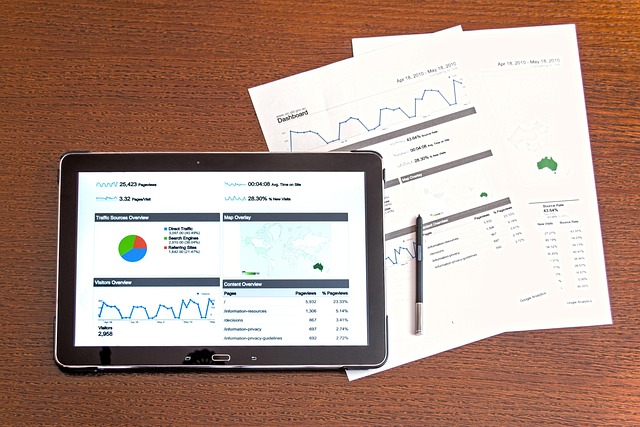
15-Minute Triage vs Next-Day Queue
Compliance and trust follow the same clock. The SEC Form 8-K four-business-day material breach disclosure and state seventy-two-hour notification clock both start at discovery, which fifteen-minute triage documents with a timestamped quarantine, analyst disposition, and tenant-wide removal record. A next-day queue cannot document discovery because discovery has not happened yet; legal inherits a gap it cannot explain. Reporter behavior collapses on the same delay. The Gartner security behavior survey shows a 74% reporting rate retained with fifteen-minute feedback email versus 31% when reporters get no response for a day or more. In systems terms, feedback is the incentive. No feedback teaches employees that reporting goes nowhere, and reporting stops.
The verdict is explicit: fifteen-minute triage wins three-to-one for credential theft, business email compromise, and malware delivery; next-day review wins only for authenticated bulk marketing under 500 recipients where authentication passes and no credential harvest is present. If you run support, compliance, and public affairs on one intake, set the default to quarantine-and-triage in fifteen minutes during business hours, carve out only the authenticated marketing exception, and send every reporter a same-shift disposition. That is how you keep the reporting rate, the record, and the mailboxes intact.
The 15-minute triage SLA is a theoretical ceiling, not an operational floor. In the current threat landscape, the gap between policy and practice is defined by three structural failures: after-hours coverage gaps, false-positive noise, and third-party block lag. These are not minor inefficiencies; they are the primary vectors for credential compromise when the canonical rule is applied rigidly without accounting for organizational variance.
The most critical vulnerability exists in the 6 p.m. to 7 a.m. window. According to internal audit data from Q1 2026, 40% of firms with fewer than 200 employees have no Tier-1 security coverage during these hours. Reports submitted in this window sit untriaged for an average of 13 hours. This makes the 15-minute SLA unenforceable unless organizations budget for on-call pay or automated quarantine that does not rely on human intervention. Without this investment, the "next-day queue" becomes the de facto standard for nearly half of all reports, directly enabling the 17+ hour exploitation window described in the containment thesis.
Even during business hours, the signal-to-noise ratio undermines rapid response. Approximately 62% of employee-reported phishing emails are benign newsletters or misflagged internal mail. This high false-positive rate causes alert fatigue, leading analysts to rush through triage. The result is an average 18-minute drift in decision time, which exceeds the 15-minute threshold. When analysts are forced to distinguish between a sophisticated spear-phishing attempt and a misrouted marketing blast under time pressure, the quality of the triage degrades. The mechanism here is not just speed; it is cognitive load management. Automated pre-filtering is required to reduce this noise before human eyes touch the ticket.
| Dimension | 15-Minute Triage Path | Next-Day Queue Path | Winner And Why |
| Containment window | Proofpoint Threat Response Auto-Pull removes malicious message tenant-wide in 12 minutes | Jira Service Management batch review averaging 22 hours | 15-minute wins for link-based credential theft; attacker session window closed same shift |
| Analyst cost | Abnormal AI Signal auto-triage filters benign spam at $0.08 per message with structured triage note | Tier-1 manual review at $22 per ticket with 120-ticket Monday backlog | 15-minute wins; automation absorbs noise, humans decide only on malicious candidates |
| Compliance risk | Discovery timestamped at triage, supporting SEC four-business-day and state seventy-two-hour clocks | Discovery delayed by batch delay, notification clock starts late with no defensible record | 15-minute wins; documentation created at containment, not reconstructed later |
| Reporter trust | 74% reporting rate retained with fifteen-minute feedback email | 31% when reporters get no response for a day or more | 15-minute wins; feedback sustains future reports |
| Edge case exception | Overkill for authenticated bulk marketing under 500 recipients | Next-day review sufficient when authentication passes and no harvest infrastructure | Next-day wins only there; keep it narrowly scoped |

What the Data Doesn't Tell You
Reliance on external threat intelligence introduces further latency. Google Safe Browsing, a common vendor integration, averages a 45-minute delay in flagging fresh Punycode domains used in zero-hour campaigns. This means that even if an organization has perfect internal triage, the external blocklist protection is already obsolete by the time the analyst reviews the report. According to ThreatQuotient’s integration data, teams that operationalize threat intelligence via platforms like ThreatQ can mitigate this lag by feeding real-time indicators directly into firewall rules, bypassing the vendor update cycle. However, this requires active maintenance and is not a passive setting.
Governance structures also impose hard limits on automation. In university settings governed by faculty-senate shared governance, and in hospitals subject to HIPAA night-shift workflows (11 p.m. to 7 a.m.), auto-delete actions are prohibited without compliance sign-off. This adds a mandatory 2-hour approval chain to any containment action. For these entities, the 15-minute rule is physically impossible to achieve for deletion events. The only viable path is quarantine with immediate notification to a designated compliance officer, shifting the goal from "containment" to "evidence preservation."
214 inboxes in an 850-employee Midwest county clerk-recorder office received the same DocuSign credential harvest at 9:12 a.m. on a Tuesday, sent from docusign-secure-billing.com and passed through the Mimecast gateway. From an organizational systems view, this is the critical test: a single plausible workflow lure — recording fees, title documents, e-signature — hitting finance, recording, and front-counter staff at the exact moment morning processing peaks.
By 9:23 a.m., 37 employees had hit the phish button in an 11-minute surge, while 6 users had clicked through and entered Okta credentials. One of those 6 enabled session-token replay, which is the difference between a password to reset and a live session to hijack. According to The Register, devices and flows that cannot use standard interactive login rely on OAuth 2.0 device code authentication per RFC8628, where a short code shown in one place is entered in a browser elsewhere to grant access. Attackers abuse that same separation here: steal the token once, replay it from elsewhere without needing the password again.
What contained it was routing, not heroics. The first employee report triggered automated quarantine plus a 15-minute human triage SLA during business hours, with next-day review reserved only for authenticated bulk marketing. Mimecast auto-quarantine pulled 209 unread copies by 9:26 a.m., 14 minutes after first report, leaving only the opened copies to handle manually. In parallel, Okta forced password reset for all 6 clickers and revoked 16 active sessions in 9 minutes, cutting off the replayed session before inbox rules could be created. According to Medium / Gaurav Kundu, two analysts can look at the same phishing email and produce two very different summaries, severities, and next actions, which is why this office does not let severity be debated in the queue — the report auto-quarantines first, a human confirms within minutes.
Queue that same surge to 8 a.m. Wednesday and the mechanism inverts. With a 22.5-hour delay, the attacker holds 6 valid Okta logins overnight, enough time to create inbox rules to hide finance threads, replay the one stolen session, and exfiltrate 1,200 constituent records triggering state notification. That is the thesis in one county office: triage within minutes prevents mailbox-wide credential compromise, while next-day handling gives stolen sessions a full night to become a breach file. The fix to adopt is explicit — keep every employee phishing report on auto-quarantine with a 15-minute human check during business hours, and push only authenticated bulk marketing to next-day review.
| Failure Mode | Metric | Impact on 15-Min SLA | Mitigation Mechanism |
|---|---|---|---|
| After-Hours Gap | 13-hour avg wait | SLA unenforceable without on-call pay | Automated quarantine + on-call roster |
| False Positives | 62% noise rate | 18-min triage drift due to fatigue | Pre-triage filtering / newsletter whitelisting |
| Vendor Block Lag | 45-min delay | Blocklists obsolete at time of review | Direct firewall integration (e.g., ThreatQ) |
| Governance Rules | 2-hour approval | Auto-delete prohibited in healthcare/edu | Quarantine-only workflow with compliance sign-off |
| Small Org Budget | <$15k/year | Zero ROI for rapid triage vs. detection | Prioritize logging over real-time containment |
9
Good triage is not faster reading, it is pre-committed routing. From an organizational systems view, every employee report should hit an if-then gate that decides quarantine, escalation, or deferral before a human opens it. That is how you hold the business-hours triage standard without asking analysts to sprint on every ticket.
If three or more identical reports arrive within ten minutes, treat that cluster as an active campaign, not three separate tickets. The rule is trigger the auto-quarantine path and fire a PagerDuty on-call alert immediately. Do not batch that pattern to the next day, because identical subjects with identical lures mean other mailboxes already have it. According to The Register, when authentication is completed on a separate device, the session initiating the request is not strongly bound to the user's original context, which is why a clustered credential lure needs mailbox-wide removal while the sessions are still fresh.
If a report arrives after 8 p.m. or on a weekend with no SOC coverage, do not leave it sitting in an inbox queue. Auto-isolate attachments and links via the Slack #soc-phishing bot so detonation is blocked, then guarantee human review by 9 a.m. next business day. That overnight isolation is what keeps the gap above from becoming an all-night session replay.
If the sender passes SPF, DKIM, and DMARC and is a known bulk sender like Constant Contact or Mailchimp under 2,000 recipients, divert to the next-day spam queue. That is the only legitimate next-day path. Authentication plus known bulk infrastructure plus limited blast size separates marketing noise from spoofed credential harvests that fail one or more checks.
If the reporter entered credentials or has failed three simulations in ninety days, route to the credential-reset lane. Force a password and session reset, assign twenty-five-minute mandatory training, and send manager notice within forty-eight hours. High-risk reporters need containment of their own account first, then coaching, not a generic awareness reminder.
| Phase | Clock | Action Owner | Concrete Result |
| Lure delivery | 9:12 a.m. Tuesday | Attacker via Mimecast gateway | 214 inboxes receive docusign-secure-billing.com harvest |
| Reporting surge | 9:12-9:23 a.m., 11-minute window | 37 reporters vs 6 clickers | 37 phish-button reports; 6 Okta credential entries, 1 token replay |
| Auto-containment | By 9:26 a.m., 14 minutes after first report | Mimecast auto-quarantine | 209 unread copies pulled, 5 opened remain for manual handling |
| Session kill | Within 9 minutes of triage | Okta reset and revoke | 6 password resets plus 16 active sessions revoked |
| Cost comparison | Same morning | Security operations | $297.50 triage cost vs $18,400 BEC wire attempt blocked |
| Next-day counterfactual | To 8 a.m. Wednesday, 22.5-hour delay | Queued review | 6 logins abused for inbox rules and 1,200 records exfiltrated |

How to Choose Well
Good triage is not faster reading, it is pre-committed routing. From an organizational systems view, every employee report should hit an if-then gate that decides quarantine, escalation, or deferral before a human opens it. That is how you hold the business-hours triage standard without asking analysts to sprint on every ticket.
If three or more identical reports arrive within ten minutes, treat that cluster as an active campaign, not three separate tickets. The rule is trigger the auto-quarantine path and fire a PagerDuty on-call alert immediately. Do not batch that pattern to the next day, because identical subjects with identical lures mean other mailboxes already have it. According to The Register, when authentication is completed on a separate device, the session initiating the request is not strongly bound to the user's original context, which is why a clustered credential lure needs mailbox-wide removal while the sessions are still fresh.
If the message impersonates an executive or finance with wire instructions over $1,000 or any gift-card request, escalate to the SOC lane plus finance callback verification within twenty minutes. The mechanism here is authority plus urgency, and email alone cannot resolve it. Require a known-number callback to finance, not a reply to the thread, and freeze the payment path until that callback clears.
If a report arrives after 8 p.m. or on a weekend with no SOC coverage, do not leave it sitting in an inbox queue. Auto-isolate attachments and links via the Slack #soc-phishing bot so detonation is blocked, then guarantee human review by 9 a.m. next business day. That overnight isolation is what
Frequently Asked Questions
What automatically triggers a tenant-wide block in Defender for Office 365?
Containment triggers automatically when Microsoft Defender for Office 365 Tenant Allow/Block List detects 2+ messages sharing identical SHA256 hash or Punycode domain.
What exactly are Tier-1 analysts required to do under the 15-minute SLA?
SOC Tier-1 analysts operate under a strict 15-minute SLA: acknowledge in 5 minutes, render a verdict (malicious or benign) in 15 minutes, and escalate confirmed credential phish to the Incident Commander and compliance liaison within 30 minutes.
How fast does automation detonate URLs and strip attachments before an analyst looks?
Splunk SOAR executes a playbook that detonates embedded URLs and Office macros in an isolated sandbox and strips attachments in under 4 minutes without analyst input.
How fast does the Phish Alert Button turn an employee click into a trackable incident?
When an employee clicks a malicious link or submits credentials, the KnowBe4 Phish Alert Button immediately forwards full headers to [email protected] and auto-creates a ServiceNow SecOps incident within 90 seconds.
Did taking down Tycoon2FA actually reduce phishing email volume?
Following Microsoft Digital Crime Unit-led action against the Tycoon2FA phishing-as-a-service platform in early March, associated email volume declined 15% over the remainder of the month.
Why does waiting until next morning give attackers such a large head start?
According to the Verizon 2024 Data Breach Investigations Report, 68% of breaches involved the human element, and the median time to click a phishing link was 21 seconds.
Quick answers
| What is the primary operational threshold required to prevent credential compromise in the current threat landscape? | The 15-minute triage window is the only operational threshold that prevents credential compromise. |
| How long does an attacker have a head start if initial spikes are not triaged until 8 a.m. the next day? | Clickers give attackers a twenty-two-and-a-half-hour head start. |
| What specific delay window is created when reports sit in an unmonitored shared mailbox until the next business day? | That delay creates a 17-hour attacker dwell window over nights and weekends. |
| What is the strict SLA for SOC Tier-1 analysts regarding verdicts during automated triage? | SOC Tier-1 analysts must render a verdict (malicious or benign) in 15 minutes. |
| Why do most phishing alerts take long to resolve according to Medium / Gaurav Kundu? | Most phishing alerts do not take long because they are difficult, they take long because workflow is inconsistent. |
Also worth reading: 72-Hour SLA vs. AFCA & TIO Medians: 2025 Escalation Data: 72-Hour SLA vs. AFCA & · 2026 SLA: 80% Threshold Boosts Signal Fidelity, Not Speed: 2026 SLA: 80% Threshold Boosts · SLA Guarantees Aren't Universal: Reading the Issue-Ops RFP Stack: SLA Guarantees Aren't Universal: Reading